- Full Brim Safety
- Posts
- Fall Protection Friday: Deck Pours and Clean-out Hazards
Fall Protection Friday: Deck Pours and Clean-out Hazards
Full Brim Safety: Build Smart, Build Safe

The Safety Man
June 26, 2026

Fall Protection Friday: Deck Pours and Clean-out Hazards
This Week’s Toolbox Talk Attached Below!
Welcome back, let’s Build Smart & Build Safe! We are closing out our concrete pump safety week by tracking the hazards that surface when work moves to elevated decks and the pour wraps up: Deck Edge Hazards and Clean-out Operations. Pouring concrete on an elevated deck involves a constantly changing work environment where your focus is split between managing the wet concrete mix and watching your footing. Today, we break down how to maintain secure leading-edge fall protection during the pour and how to execute the final clean-out phase without risking a high-pressure blowout or a fall.
Managing the Leading Edge During a Pour
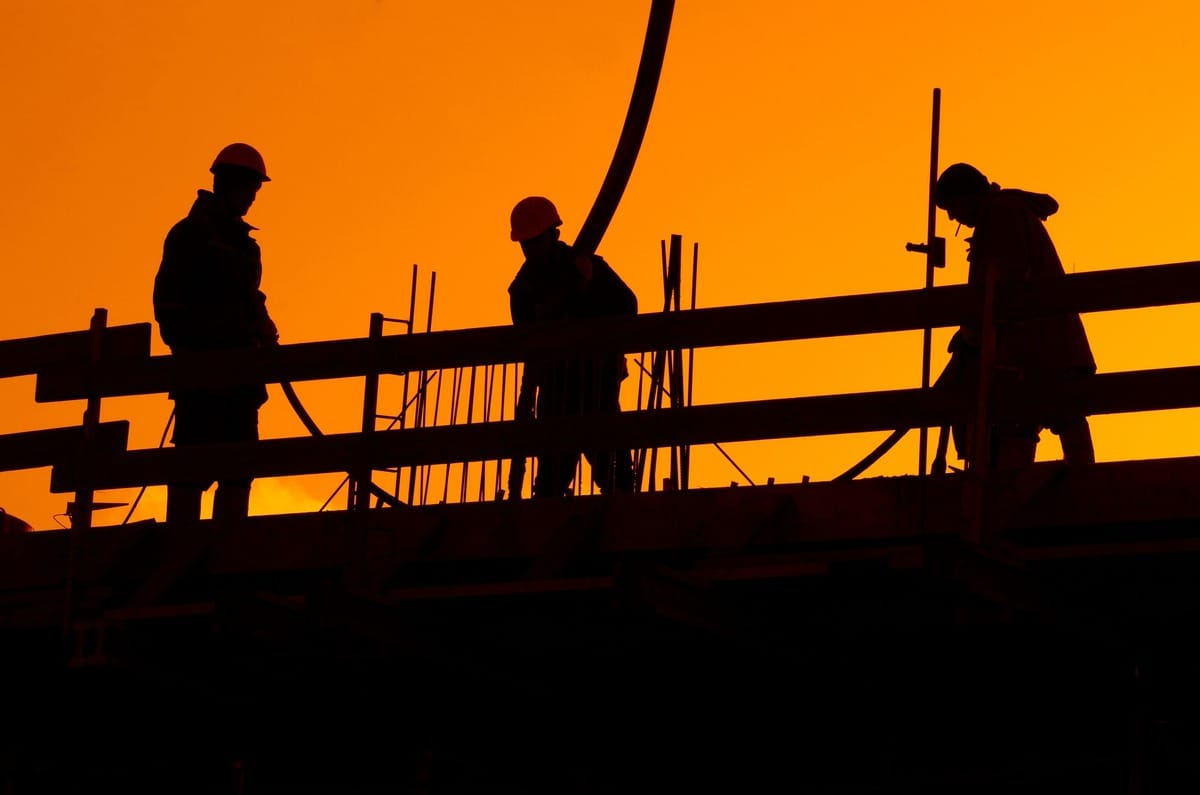
When placing concrete on elevated slabs or decks, the placing crew is consistently working near open edges or incomplete guardrail systems.
The Blind Backstep: The hose handler and rake crew spend a significant portion of their day looking down at the mud or looking up at the boom nozzle while walking backward. Without strict perimeter controls, a blind backstep can send a worker straight over the edge.
Slick Working Surfaces: Wet concrete slurry, release agents on formwork, and exposed rebar grids turn an elevated deck into a slip-and-trip minefield. Slipping near a leading edge multiplies the severity of a standard fall.
Guardrail Displacement: Often, perimeter guardrails must be temporarily removed or modified to allow the concrete pump boom to position or swing low over the deck edge. Leaving these edges unprotected while the crew is actively placing concrete is an automatic stand-down violation.
The Clean-out Phase: High-Pressure Risks
The danger doesn't stop once the last cubic yard of concrete leaves the hopper. Cleaning out the residual concrete from the pump lines at the end of the day is a highly hazardous process.
The Clean-out Ball Blowout: Cleaning the lines typically involves inserting a dense foam clean-out ball into the pipe and forcing it through using pressurized water or compressed air. If compressed air is utilized, the entire pipeline becomes a high-pressure vessel.
No Nozzle Watchers: Never allow anyone to stand at the discharge end of the line during a clean-out operation. As the clean-out ball reaches the end of the pipe run, it can eject like a cannonball, accompanied by a violent blast of pressurized concrete debris.
Secure Containment: The discharge end of the line must be directed into a designated washout container or containment structure. Secure a heavy canvas clean-out bag or a specialized target box over the pipe end to catch the clean-out ball and dissipate the pressure safely.
Implementation: The Friday Finish Protocol
Before the final yards are ordered and the clean-out process begins today:
Verify Leading-Edge Controls: Ensure that all perimeter guardrails are completely secure. If a guardrail section must be dropped to accommodate the boom, every worker within 6 feet of that exposed edge must be tied off using a fully compliant personal fall arrest system (PFAS) attached to an approved anchor point.
Ban Compressed Air Clean-outs Where Possible: Use water pressure rather than compressed air to push the clean-out ball whenever feasible. If compressed air is mandatory due to line length, ensure a certified operator runs the compressor, and clear all non-essential personnel from the entire pipeline track.
Clear the Deck Debris: As the pour finishes, clear away empty concrete additive bottles, scrap lumber, and tool cords from the walking paths before the washdown begins.
Download Your Toolbox Talk Here!

Please help us grow, share us with your friends and coworkers for a daily dose of construction safety tips!
-The Safety Man